Resources for Healthier Workplaces
I've brought together practical tools, assessments and trusted external resources to help managers and employees navigate difficult conversations, understand workplace relationships and reduce work-related stress.
Some are resources I've developed and use in my own programmes. Others are useful guidance from organisations such as the Health and Safety Executive. Whether you've attended one of my workshops or simply landed here looking for help, I hope you find something useful.
Managing work-related stress
Not sure where to start? The HSE has a lot of information available. I've selected some of the resources I think are particularly useful for managers and organisations looking at the relationship between workplace stress, management and working relationships.
HSE Management Standards for work-related stress
A starting point for understanding the six areas that can contribute to work-related stress: Demands, Control, Support, Relationships, Role and Change. Get here
Tackling work-related stress: step-by-step workbook
Useful for organisations looking at the bigger organisational risk-assessment process. Get here
Work-related stress and how to manage it webinar Nov 10 ‘26
Hosted by TSO, a Williams Lea by RRD company. 3pm in London
Hear from HSE about the stress management standards and the stress indicator tool designed to help workplaces successfully manage work-related stress. The webinar will conclude with a live audience Q&A, giving you the chance to ask our panel of experts any questions you may have.
2. Understanding yourself and others
Have you attended any of my courses? Here are some resources I often recommend to my delegates.
Employee Wellbeing Questionnaire
A simple questionnaire to help explore how employees are feeling at work and identify areas that may be affecting their wellbeing, engagement or working relationships.
3. Better workplace conversations
Preparing for a difficult conversation
A simple guide to help you separate facts from assumptions, think about the outcome you need and prepare before starting the conversation.
A practical guide to help you give clear, specific feedback and turn it into a useful two-way conversation.
A simple guide to help you recognise when something needs addressing and start the conversation before the issue grows.
HSE Talking Toolkit
This one is very relevant to you. It's designed to help managers start practical conversations with employees about the six Management Standards, including workplace relationships. Get here
HSE Line Manager Competency Indicator Tool
I'd definitely include this. HSE specifically provides tools to help managers reflect on whether their behaviour helps prevent or contributes to workplace stress. That's almost tailor-made for the conversation you're starting with employers. Get here
HSE Stress Indicator Tool
For organisations wanting to gather anonymous employee feedback across those six areas. HSE's tool uses 35 questions and can support the stress risk-assessment process. Get here
The Mood Meter
A simple tool to help you identify and name emotions — particularly useful before responding to a difficult or emotionally charged situation.
Conversation Planner
A simple worksheet to help you think through what you need to discuss, prepare useful questions and agree clear next steps.
Mini DISC Personality Profiling Test
A quick assessment to help you understand your communication preferences and how they may differ from others — useful for adapting your approach, reducing misunderstandings and improving workplace relationships.
What to say when…
A practical guide with useful phrases to help you respond when someone becomes upset, defensive, goes quiet or the conversation starts to go off track.
Ready to go further?
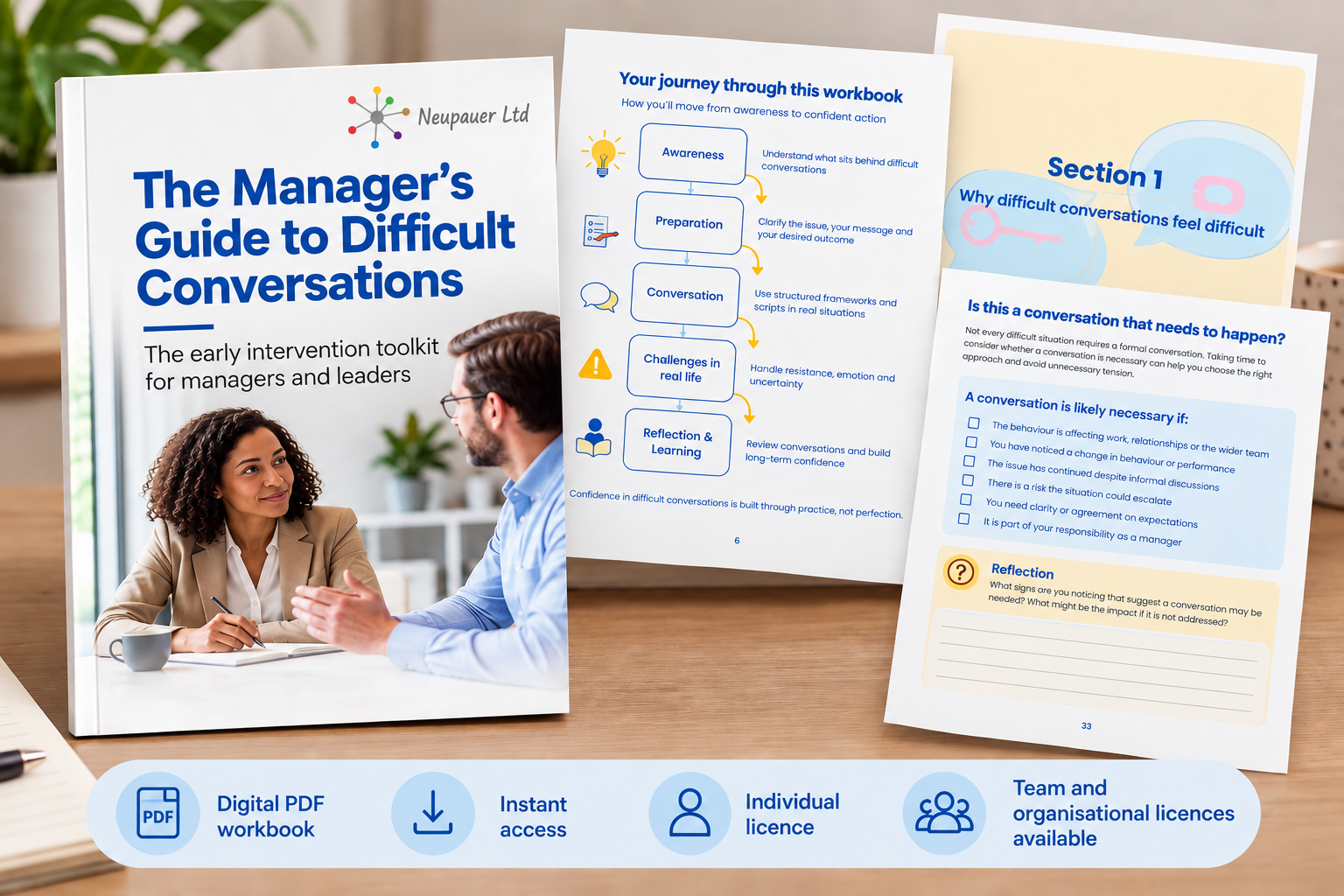
The Manager’s Guide to Difficult Conversations £79 Digital PDF workbook
A practical early-intervention toolkit for managers and leaders who want to handle difficult conversations with more confidence.
4. For managers
Giving Feedback that helps
Addressing issues early
Manager reflection tool
A quick reflection tool to help you think about your conversations, reactions and relationships with your team.
Recognising changes in behaviour
A practical guide to help you notice changes in behaviour, avoid assumptions and know when it might be time to check in.
Can’t find what you’re looking for?
I'm continually adding to this collection, so do check back from time to time. If there's something you're looking for and can't find, get in touch. I may be able to help or point you in the right direction.